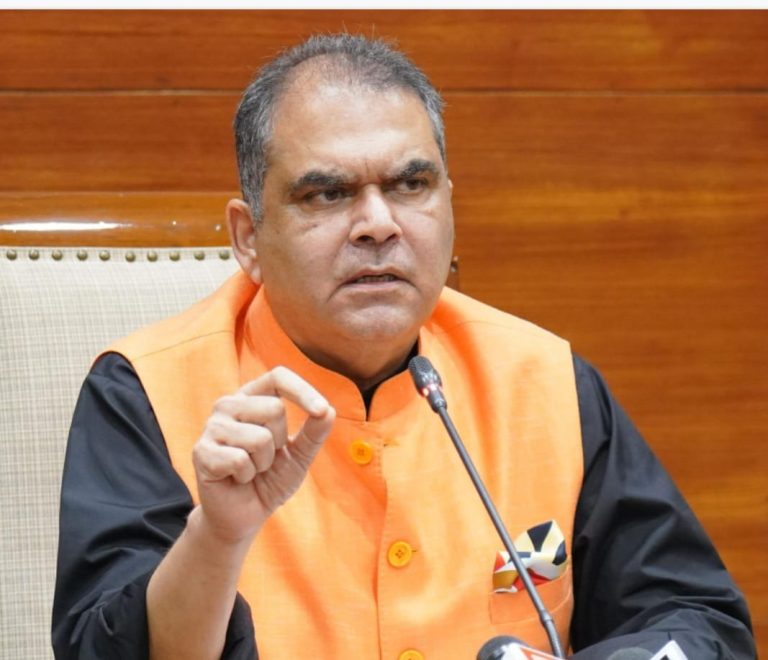

Our government is committed to eliminating all kinds of complexities in the mining sector and utilizing natural resources for the public good: Barinder Kumar Goyal
Chandigarh, January 7, 2026 : Under the leadership of Chief Minister Bhagwant Singh Mann, the Punjab government has implemented historic reforms in the state’s mining sector.The Punjab government has approved significant amendments to the Minor Mineral Policy to ensure adequate raw material supply, curb illegal mining and corruption, reduce consumer prices, increase state revenue, and eliminate monopolies.
After extensive consultations with stakeholders at various levels, the Cabinet approved these amendments, which include the introduction of new mining categories, modernization of the auction system, and simplification of regulatory processes. These significant reforms mark a historic shift towards transparency, fairness, and citizen-friendly governance in the mining sector.
Punjab Mining Reforms: Transparency, Revenue, Control
Mining and Geology Minister Barinder Kumar Goyal said that our government will simplify the mining sector and use natural resources to benefit the people.
He said that by moving towards transparent online auction processes, we are increasing state revenue and curbing illegal mining while ensuring a level playing field for genuine operators.
He said that for years, Punjab’s mining sector faced a severe shortage of authorized mining sites. With only about 35 mines operational across the state, the legal supply of construction materials needed for roads, housing projects, and infrastructure projects was far less than the demand. This gap created a void, leading to the proliferation of illegal mining and unregulated supply chains.
To address this structural problem, the Punjab government adopted a clear strategic approach. Instead of focusing solely on curbing illegal activities, the government decided to gradually bring supply into the legal framework.Under this initiative, the government encourages operators to come forward, disclose their existing mining activities, complete the necessary documentation, and operate strictly within the prescribed regulatory framework. The government has clarified that it will allow mining to continue only if operators conduct it legally, transparently, and with the required approvals.
Mining Sites for Strengthening the Local Industry
A major reform under the revised policy is the introduction of Crusher Mining Sites (CRMS) to address the long-standing issues faced by the crusher industry. Previously, the department limited the auction of mining material to commercial mining sites. This decision led to a persistent shortage of raw materials. Despite owning land with gravel deposits, the government did not allow crusher owners to utilize it.This restriction forced them to rely on CMS output or procure material from other states. These materials were often procured at exorbitant prices.
Under the CRMS framework, crusher owners who own land with gravel deposits can now obtain mining leases and extract mining material for their operations. This reform will significantly increase the availability of gravel and sand. It will accelerate development projects across Punjab. The reform will reduce dependence on other states. It will also strengthen development activities throughout the state. This will reduce reliance on other states, curb illegal inter-state mineral movement, create employment opportunities within the state, improve the efficiency of the crusher industry, increase state revenue, and lower prices for consumers.
Empower Farmers and Eliminate Monopolies
In addition to the existing commercial mining sites and public mining sites, the government has also introduced Land-Owner Mining Sites (LMS) for sand mining. Previously, unknown operators often faced obstacles because landowners hesitated to allow them onto their land.In addition, the actual landowners frequently contacted the government to obtain permission to mine on their own land.
The LMS framework now allows landowners to mine sand from their land, either themselves or through authorized persons, upon payment of royalty to the state government. This reform is increasing the number of legal sites, which will boost sand supply and state revenue, lower consumer prices, and create new business opportunities for Punjabis. Furthermore, it will ensure that every eligible landowner can obtain a mining lease and sell the mined material in the open market, which will go a long way in eliminating monopolies.
Smooth Approvals and Strong Industry Support
This policy is also effectively addressing common obstacles in the mining sector, such as regulatory delays. Mining-related certification used to take seven to nine months. Environmental clearances also took a similar amount of time. Institutions like the State Environment Impact Assessment Authority (SEIAA) processed these.In some cases, the process took several years. Now, these processes are on a mission mode. Multiple clearances are processed simultaneously. This approach ensures timely decisions without compromising the regulatory framework.
These reforms have provided a significant boost to the mining sector. The government has received 290 applications under the CRMS and LMS categories. Processing of these applications is underway, with 26 Letters of Intent already issued. The government will process the remaining applications quickly once it completes the necessary procedures.These procedures include the inclusion of sites in district survey reports.
Punjab Identifies 200 New Sites
Over 200 new sites have been identified in the districts. Surveys, technical investigations, public consultations, and environmental impact assessment studies are currently underway. Most of these are expected to be operational between December 2025 and March 2026. This will significantly alleviate supply disruptions. It will also reduce the burden on existing sites.
Officials stated that the preliminary approvals reflect planned reforms to the mining supply chain. They stated that wherever mining operations continue, they must be in accordance with legal, documented procedures, and regulatory approvals.The government will take strict action against any activity outside this framework. Officials reiterated that the state permits mining, but it will not tolerate any laxity toward illegal activities.
First transparent auction process in three years and major reforms
The Punjab Government has launched a new auction process for mining sites. This reaffirms its commitment to smooth and good governance. It is the first such process in three years. In the first phase of this process, 29 sites were auctioned. These were commercial mining sites. The auction was conducted through an open and competitive online bidding process. The auction received 16 successful bids. It generated revenue of 11.61 crore.
The Cabinet has approved comprehensive reforms to address systemic deficiencies in the old auction model. The model often led to problems like lottery draws, involvement of fake bidders, revenue loss, and delays. These reforms are in line with national best practices. These reforms include the adoption of a price-based bidding system. It ensures pre-determined, appropriate payments from bidders. The reforms also involve advance royalty payments for stable revenue flows. They facilitate the transfer of responsibility for environmental clearances to bidders. The reforms incorporate clear dead rent provisions to prevent speculation. They also extend the lease period from three years to five years for greater operational stability.
100 More Sites to Go Under Auction
The government is bringing approximately 100 more sites under auction in a phased manner. These reforms will improve the availability of raw materials for industry. They aim to increase state revenues and enable faster mine operations. Additionally, the reforms strengthen regulatory clarity and transparency.
Officials said the introduction of CRMS and LMS are part of comprehensive reforms in Punjab’s mining sector. Streamlined approvals are also included. New auction systems complete these reforms. These reforms aim to eliminate illegal mining and increase revenues.They also manage natural resources in a clean, fair, and people-centric manner.