
Punjab Government's Big Gift for NRIs: 27 Services Available from Home Through E-Sanad Portal, Large-Scale 'NRI Meet' Planned for 2026
Chandigarh, January 5, 2026 : The Aam Aadmi Party government in Punjab has taken a revolutionary step for expatriate Punjabis and the NRI community by launching the ‘NRI E-Sanad Portal’. Under this digital initiative, Punjabis living abroad will now be able to access 27 important government services online. This initiative by Chief Minister Bhagwant Mann aims to free the NRI community from the need to repeatedly travel to Punjab for documentation and administrative services. This portal will prove to be a boon for expatriate Punjabis residing in Canada, the USA, the UK, Australia, and European countries who wish to stay connected to their home state.
Through this portal, NRIs will now be able to obtain birth certificates, death certificates, residence certificates, income certificates, caste certificates, marriage registration certificates, and many other documents from the comfort of their homes. Previously, NRIs had to either travel to India or go through a lengthy process through relatives, which often took months. Now, all these services will be available with just a few clicks and digital verification. The government has ensured that the portal is user-friendly and available in both Punjabi and English. This will not only save time and money but also ensure transparency.
Services Online : Punjab Govt to Host ‘NRI Milni’ in 2026
The Punjab government has also announced a special gathering for NRI Punjabis in 2026, called ‘NRI Milni’. “This unique initiative will unite Punjabis settled across the globe on a single platform, enabling them to actively contribute to the state’s development while preserving their cultural identity.”This gathering will act as a strong bridge between expatriate Punjabis and their homeland.The event will explore opportunities for collaboration in business, education, agriculture, health, and technology. The government believes that the NRI community makes a significant contribution to Punjab’s economy, and it is the state’s responsibility to honor them. According to statistics,
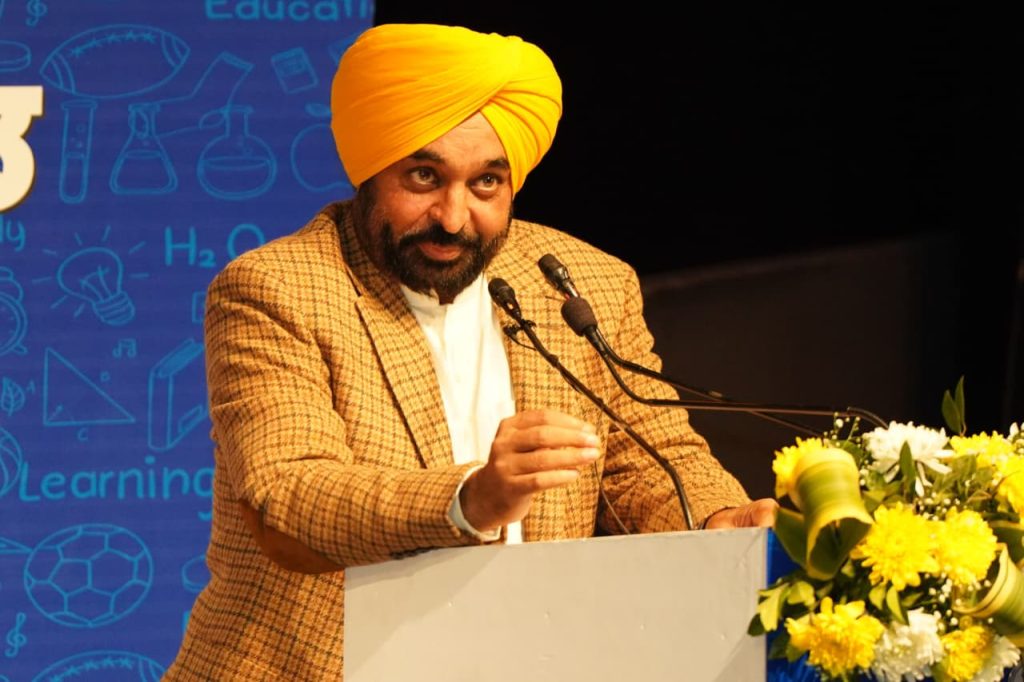
Punjab has the highest rate of emigration, with over 3 million people of Punjabi origin settled worldwide. These Non-Resident Indians (NRIs) send billions of rupees in foreign currency to their families every year, strengthening the state’s economy. However, they often faced difficulties due to complexities in administrative services. Chief Minister Bhagwant Mann said, “Our NRI brothers and sisters are the heartbeat of Punjab. Making services simpler and more accessible for them is our priority. The e-Sanad portal is a concrete step in that direction.” He also stated that the government plans to add more services to the portal in the future.
Punjab to Add Property, Pension Services to NRI Portal
Sources in the NRI Welfare Department say the portal will soon include services related to property documents, pension, and legal certificates.
The state government has coordinated with Indian embassies and high commissions abroad to expedite document verification. The portal uses modern technologies like digital signatures, Aadhaar-based authentication, and OTP verification to ensure complete security. Experts believe this move could set an example for other states with large NRI populations.
Jaswinder Singh, who lives in Canada, welcomed the initiative, saying, “This is a huge relief for us. Now we won’t have to buy tickets to India for every small task. The Punjab government has understood our problems and addressed them.” Harpreet Kaur, a businesswoman in London, said that such digital facilities will help Punjabi NRIs stay more strongly connected to their roots. The NRI community welcomed the announcement with widespread joy on social media. Many have called it a ‘game-changer’ and a ‘historic step’.
Experts Praise Punjab’s Digital Governance Push
Experts say this is a commendable effort towards digital governance that will not only reduce corruption but also improve the quality of services. Technical expert Dr. Amandeep Singh said, “This move by the Punjab government is far-sighted. Such portals are common in developed countries, but this initiative at the state level in India is remarkable.” He said that if implemented correctly, this initiative would take the relationship between overseas Indians and their homeland to new heights. It would also boost investment and cultural exchange.
The Punjab government has also ensured that elderly members of NRI families living in rural areas can benefit from this service. Help desks have been set up in all tehsil and district-level offices. Trained staff will assist citizens and help them with the online application process. The government has also launched a toll-free helpline number that NRIs can contact for any issues. Assistance is available in both English and Punjabi to overcome language barriers.
Thousands of NRIs Register on Punjab Portal in First Month
Officials associated with this initiative say that thousands of NRIs have already registered on the portal in the first month itself. The government has set a target of making all 27 services fully operational within the next six months, ensuring that the NRI community does not face any inconvenience. The government is integrating all relevant departments, including the Revenue, Health, Education, and Police Departments, with this portal. It has given top priority to data security and privacy and uses encryption in line with international standards.
This initiative by the Punjab government will undoubtedly prove to be a milestone in strengthening the ties between expatriate Punjabis and their homeland. The younger generation, in particular, who were born and raised abroad, will now be able to easily connect with their roots. In the digital age, such initiatives are not only convenient but also a necessity.The NRI Milni portal will form the backbone of future NRI gatherings and play a crucial role in bringing Punjabis from around the world together on a single platform. This effort by the Punjab government demonstrates that public service is the fundamental objective of the government.