
Release ₹7,757 crore RDF dues, strengthen GST compensation mechanism for states: Harpal Singh Cheema
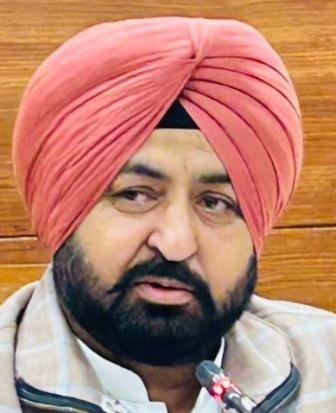
CHANDIGARH /NEW DELHI, 10th January 2026: Punjab Finance Minister Harpal Singh Cheema on Saturday urged the Union Government to extend immediate fiscal assistance and announce a special economic package for Punjab, stressing that the state has endured an extraordinarily difficult year marked first by heightened India–Pakistan border tensions and then by the worst floods witnessed in decades in 2025.
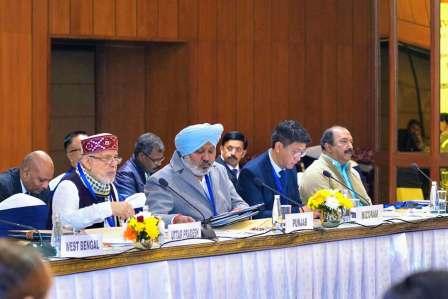
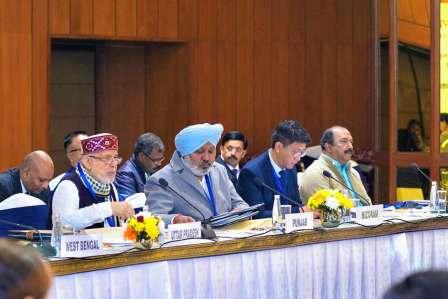
During a pre-Budget meeting with Union Finance Minister Nirmala Sitharaman in New Delhi, the Punjab Finance Minister submitted a detailed memorandum laying out Punjab’s key financial requirements and policy demands for the Union Budget 2026–27.
Emphasising Punjab’s strategic importance, Punjab Finance Minister Harpal Singh Cheema said the state, being the country’s first line of defence, suffered severe economic disruption due to prolonged security tensions along the international border, followed immediately by a devastating monsoon disaster that was officially declared a calamity of severe nature by the Ministry of Home Affairs (MHA).
package : formally requesting permission for a one-time additional borrowing limit
Explaining the scale of devastation, the Punjab Finance Minister stated that floods impacted more than 2,300 villages and affected nearly 20,000 families across the state. He informed Union Finance Minister Nirmala Sitharaman that comprehensive ground-level assessments have pegged the total damage at ₹12,905 crore. “To manage rehabilitation and reconstruction arising from such extraordinary circumstances, Punjab requires fiscal flexibility,” he said, formally requesting permission for a one-time additional borrowing limit of 1% of GSDP for 2025–26 under the FRBM (Fiscal Responsibility and Budget Management) Act provisions applicable during natural disasters and national security emergencies.
Raising concerns related to national security, Minister Harpal Singh Cheema underlined that recent developments along the international border have made it imperative to substantially upgrade Punjab’s security infrastructure. He sought special central assistance of ₹1,000 crore for modernization of the police force, strengthening emergency response systems, and deploying advanced anti-drone technology to effectively counter cross-border threats and narcotics trafficking. “As a border state bearing a disproportionate security burden, this support should be seen as cooperative federalism in action, not as a concession,” he said.
Centre to immediately release the pending RDF
Turning to agriculture and rural infrastructure, the Punjab Finance Minister flagged the issue of withheld Rural Development Fund (RDF), urging the Centre to immediately release the pending RDF amount of ₹7,757 crore calculated up to June 2025. “These funds are critical for maintaining rural roads and infrastructure,” he said.
Stressing the urgent need to shift away from water-intensive crops, Minister Harpal Singh Cheema proposed a special budgetary allocation for paddy diversification, arguing that the current incentive is inadequate. He requested that the incentive be increased to ₹15,000 per acre to drive real behavioural change among farmers and safeguard groundwater resources.
On the issue of GST reforms, The Punjab Minister pointed out that Punjab has suffered a severe and continuing revenue shock following the implementation of GST 2.0. “Punjab is facing an annual revenue loss of nearly ₹6,000 crore, which amounts to around 44% of its own tax revenue,” he noted. The Minister strongly pressed for a predictable GST stabilization or compensation mechanism for states facing such structural revenue erosion, stating that fiscal sustainability of states cannot be compromised.
ensure uninterrupted delivery of essential health services across Punjab
The Punjab Finance Minister also expressed strong opposition to the proposed changes to the MGNREGA framework, arguing that the new model dilutes the employment guarantee and transfers a significant financial burden to the states. He called for restoration of the original demand-driven structure and funding pattern of the scheme.
Raising concerns over public health financing, Minister Harpal Singh Cheema drew attention to the sharp reduction in cash allocation under the National Health Mission (NHM) for 2025–26, which he said was cut from the initially communicated ₹452.78 crore to ₹252 crore. He requested restoration of the original allocation to ensure uninterrupted delivery of essential health services across Punjab.
Punjab Finance Minister Harpal Singh Cheema concluded his submission. He said he hoped the Union Budget would reflect the true spirit of cooperative federalism. He emphasized that it should respond to Punjab’s unique challenges. Punjab is a border state recovering from security pressures and climate-induced disasters.
*The key demands are:*
*A. SDRF & GST:*
1. SDRF Relief: Exemption of State Disaster Response Fund (SDRF) balances from interest liability and permission to utilize accumulated funds.
2. GST Compensation: Introduction of a mechanism to compensate for the annual revenue loss of approx. ₹6,000 crore post-GST 2.0 reforms.
*B. Security & Policing:*
Special Assistance: A grant of ₹1,000 crore for police modernization, border security infrastructure, and anti-drone technology.
*C. Agriculture & Cooperatives:*
1. Paddy Diversification: Special budget allocation to increase farmer incentives from ₹7,500 to ₹15,000 per acre to reduce paddy cultivation.
2. RDF Release: Immediate release of pending Rural Development Fee (RDF) amounting to ₹7,757 crore.
3. Interest Subvention: Increase interest subvention on cooperative crop loans from 1.5% to 3%.
4. NABARD Refinance: Restore refinance to Rural Cooperative Banks to a minimum of 40% at concessional rates.
*D. Water Resources & Flood Management:*
1. PMKSY Support: Budgetary support of ₹1,053 crore for canal projects fed by the Sutlej River.
2. Flood Control: Operational control of BBMB reservoirs to be handed over to Punjab during the flood season.
3. Dam Dues: Release of pending shares from J&K for Ranjit Sagar Dam (₹297 crore) and Shahpurkandi Dam (₹665 crore).
4. JJM Funds: Release pending central share of ₹443 crore for the Jal Jeevan Mission.
*E. Rural Development, Health, and Employment:*
1. MGNREGA: Restoration of the original demand-driven mandate and funding model, opposing the proposed transition to the “Viksit Bharat Guarantee for Rozgar and Ajeevika Mission”.
2. NHM Allocation: Restoration of the National Health Mission cash allocation to ₹452.78 crore (currently reduced to ₹252 crore).
*F. Power Sector*
1. Coal Freight: Reinstatement of the 20% railway freight concession on coal transportation.
2. Coal Usage: Permission is granted to use coal from the Pachhwara Central mine. This coal is for private thermal plants, specifically Talwandi and Nabha. The objective is to lower tariffs.
3. Trading Margin: Reduction of renewable energy trading margins from 7 paise to 2 paise / kWh.