Medical College at Lehragaga to start with 220-bed hospital and 50 MBBS seats, expand to 400 beds and 100 seats within eight years
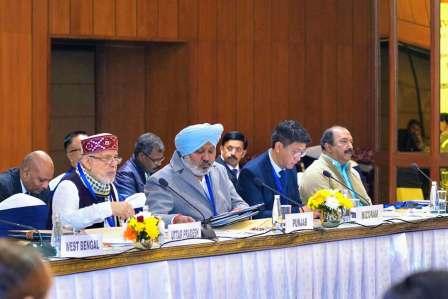
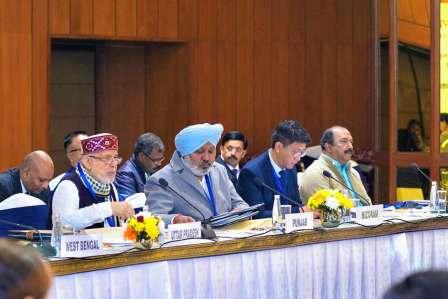
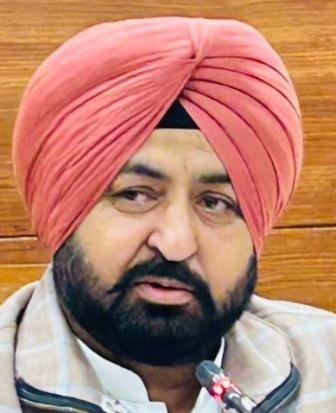
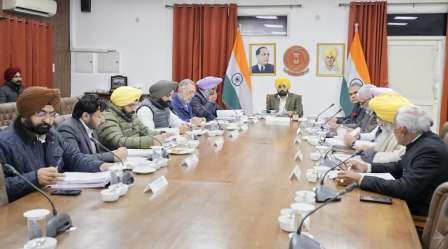
CHANDIGARH, 9th January 9 2026: Signalling an assertive push toward strengthening public healthcare, modernising higher education and delivering tangible relief to citizens, the Punjab Cabinet under the leadership of Chief Minister Bhagwant Singh Mann on Friday cleared a sweeping set of decisions, led by the approval of over 19 acres of land at Lehragaga for setting up a Medical College and Hospital.
The decisions, taken at a meeting of the Council of Ministers chaired by the Chief Minister, also include India’s first comprehensive Private Digital Open Universities Policy, 2026, extension of Amnesty Policy 2025 for plot allottees, rationalisation of GMADA property prices, approval for desilting of the Sutlej to fast-track infrastructure projects, and adjustment of staff of Baba Hira Singh Bhattal Institute in government departments, reflecting the government’s focus on healthcare expansion, education reform, infrastructure acceleration and pro-people governance.
Medical college approved at Lehragaga
Briefing the media after the Cabinet meeting chaired by the CM Bhagwant Singh Mann, the office the Chief Minister stated that the Cabinet gave approval to allot 19 acre four Kanals land, located at Baba Hira Singh Bhatthal Technical College, Lehragaga, on nominal lease rent to Janhit society for establishing a minority medical college by the Jain community. The admission of students and allocation of seats in the medical college to be established by the Jain community shall be regulated strictly in accordance with the guidelines / notifications issued by the State Government from time to time. The fee structure for all categories of seats shall also be determined and charged strictly in accordance with the guidelines / notifications issued by the Punjab Government.
The Cabinet also decided that trust should start the functioning of hospitals at the earliest and within a period of five years from the date of execution / commencement of the Memorandum of Understanding (MoU). The medical college would be established and operationalized with a hospital of not less than 220 beds and an intake capacity of 50 MBBS seats, and should be further expanded to a hospital of not less than 400 beds with an intake capacity of 100 MBBS seats within eight years of MOU. The move is aimed at imparting quality education to the residents of the state on one hand and emerging the state as a hub of medical education on the other.
Cabinet approves Punjab Private Digital Open Universities Policy, 2026
In another significant decision, the Cabinet also gave nod to the Punjab Private Digital Open Universities Policy, 2026 to regulate and promote private digital open universities offering online and open distance learning (ODL) programs thereby imparting quality higher education to the students of the state thereby opening new vistas of employment for them. The policy aligns with UGC Regulations, 2020, and introduces state-level standards for quality, accessibility, digital infrastructure, data governance, and learner protection. This pioneering policy will expand flexible, affordable higher education and position Punjab as a digital learning hub.
Through this India’s First Historic Reform in Higher Education, The Punjab government has introduced a new Digital Open University Policy. Under this policy, private institutions can establish fully digital universities in Punjab. This is India’s first such policy and so far, only Tripura has set up a digital university, but without a comprehensive policy, so Punjab becomes the first state to provide both a policy and a model in this area.
Digital Universities Policy Bridges Online Learning Gap
The policy is need of hour as Crores of students worldwide are learning from online platforms. Similarly, lakhs of students are passing tough exams like JEE, NEET, and UPSC by watching free online lectures. In India too, crores of youth are building careers by learning from online courses and AI apps but the existing university policy only allowed physical campuses.
This meant digital-first universities were not legally possible in India, as a result, students got formal degrees from colleges but learned key skills online thereby creating a huge gap between the two but the new policy bridges this gap. Now students can complete their entire degree from home on mobile or laptop and these degrees will be legally valid and compliant with AICTE/UGC standards. This will prove to be boon For students or professionals busy with life, family, or jobs as they will be able to Complete degrees without quitting jobs, Without changing cities and even Without going to classrooms
Strict Norms Set for World-Class Digital Universities
Thus, this initiative will usher in a new era of lifelong learning and upskilling and strengthen a culture of continuous learning in IT, AI, Business, Healthcare, Manufacturing, and Data Science. To set up these Digital Universities, authorities will require at least 2.5 acres of land, along with digital content studios, control rooms, server rooms, operations centers, and state-of-the-art digital infrastructure.. Likewise, every digital university must have Digital content creation studios, IT server rooms, Learning Management System (LMS) operations center, Digital examination control rooms, Tech-enabled call centers, 24×7 student support systems and a Minimum ₹20 Crore Corpus Fund. This will ensure that only serious and capable institutions come forward, and the Punjab Assembly will pass separate bills for every approved proposal, making each digital university legally strong and transparent.
This policy is modeled on the world’s successful digital universities like Western Governors University (USA), University of Phoenix (USA), Walden University (USA), Open University Malaysia and others who have provided low-cost, modern, high-quality education to millions of students.
Punjab to Become India’s First Digital Education Hub
Punjab is now building India’s most modern higher education ecosystem. It will directly benefit Punjab’s students by lowering the cost of education. The digital mode reduces infrastructure costs. This results in more affordable fees and no hidden expenses. New skills like AI, Cybersecurity, Cloud Computing, Business Skills, and Robotics will be part of the degree program. This will solve students’ biggest problem. Earlier, they got degrees from one place and real learning from another. But now, both will be available in one place through digital universities. This approach will save time and money for lakhs of youth. There will be no commuting, PG/hostel, stationery, or travel expenses. Punjab is leading the country. The state government believes that education can no longer be confined to the four walls of classrooms.
Every top university in the world is moving toward AI and digital modes. For India to advance, Punjab must take this transformative step first. This policy will make Punjab India’s first digital higher education hub. Punjab will demonstrate the future of higher education in India. This policy is Modern, Innovative, Technology-driven, Accessible, Employment-focused, World-class, Future-oriented, and will open a new chapter in Punjab’s higher education.
*Amnesty Policy 2025 extended for plot allottees*
The Cabinet provided significant relief to plot allottees. They approved the extension in the Amnesty Policy 2025. This applies to allotted/auctioned plots under various schemes of the Housing and Urban Development Department. This will allow the default allottees of the Special Development Authority to apply one more time. They can reapply under Amnesty Policy 2025 before the cutoff date March 31, 2026. The Allottee can deposit the requisite amount within three months of its approval to the concerned Special Development Authority. The allottee who is interested to avail the benefit under this policy will have to submit an application before the cutoff date i.e. March 31, 2026.
Green signal to rationalise GMADA property prices*
In another pro-people initiative, the Cabinet also approved reducing the prices of various GMADA (Greater Mohali Area Development Authority) properties. This decision follows the report submitted by the independent evaluators. The government has amended the guidelines for e-auctions. These amendments relate to determining reserve prices for various residential and commercial plots. They also cover institutional and industrial sites, and others. Development authorities will appoint three independent valuers. These valuers are empaneled by nationalized banks or the Income Tax Department. They will assess the rates of such sites.
For sites that have not sold in the previous two or more auctions, the average of the rates reported by these valuers will be considered. This average will serve as the criterion for determining the reserve price. It will require approval from competent authority. The observations of the Committee have been considered for deciding the rates. These rates will be valid for one calendar year. However, if there are need-based changes within the calendar year, the Minister in charge will review them. The Minister must approve the changes in the Department of Housing and Urban Development.
*Approval for desilting of River Sutlej*
The Cabinet gave approval to NHAI (National Highways Authority of India) or its agencies. They can carry out the desiltation in River Sutlej at the sites allotted by the Department of Water Resources. The rate is ₹3 per cubic foot. This matches the price at which the desilting contract at Siswan Dam was executed. The approval comes with the further condition. The above said price shall be available to NHAI or its contractors/agencies only till June 30th, 2026. This is for providing simple earth to NHAI for construction of road projects namely Ludhiana to Ropar. Nod was also granted exemption from the provisions of Section 63 of the Punjab Transparency in Public Procurement Act 2019.
gave nod for adjustment of the staff members
The Cabinet approved the adjustment of the staff members of Baba Hira Singh Bhattal Institute of Engineering and Technology. They will be placed against the vacant posts available in the Department of Technical Education & Industrial Training. This also applies to autonomous institutions under the department on deputation. The decision has been taken in the larger public interest to safeguard the interests of the employees.